
NATIONWIDE DELIVERY
ACROSS MAINLAND UK

INSTALLATION AVAILABLE

CONTACT FOR SUPPORT
Buy Online UK
The Off Mains Tank Store
Browse and buy online, septic tanks, treatment plants, cesspools and water storage, delivered nationwide across mainland UK.

Septic Tanks

Treatment Plants

Cesspools

Water Tanks & Rainwater
Wastewater Storage Tanks

Accessories
Shop Water Butt SALE

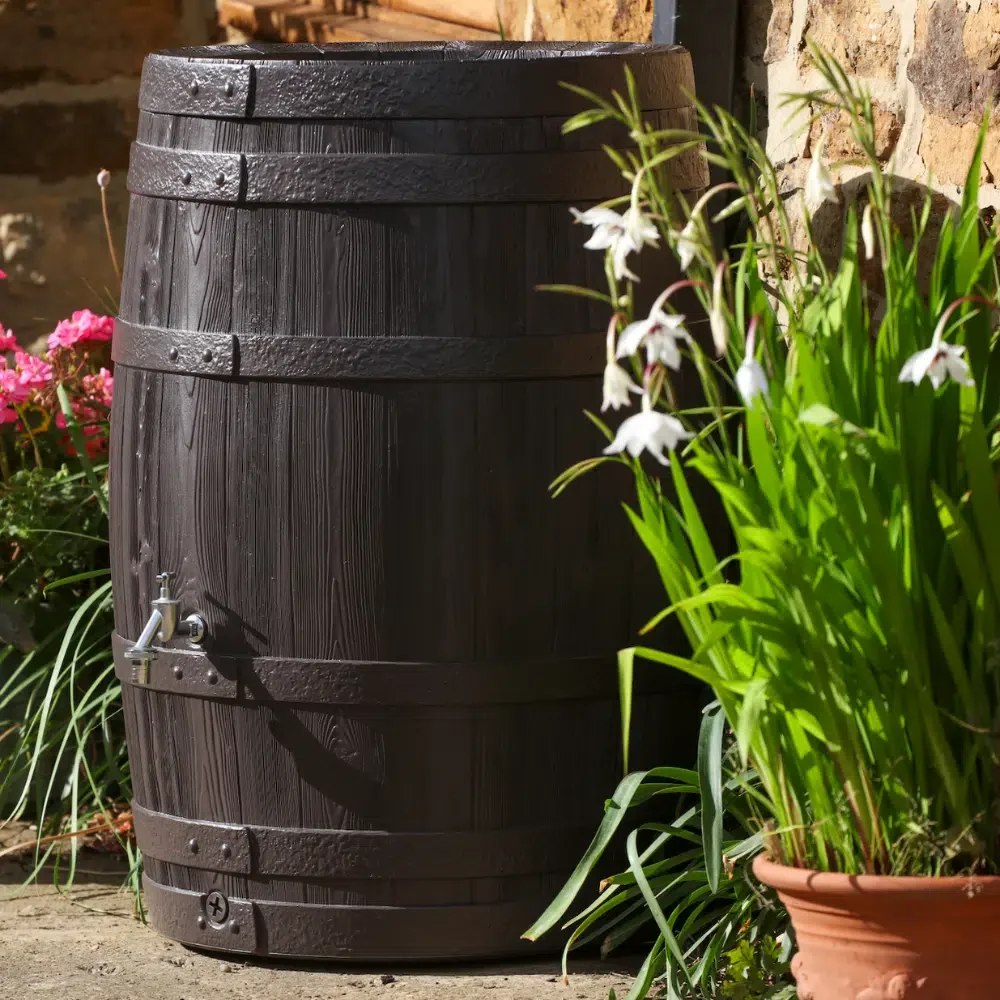
The Garantia Barrica Rainwater Barrel is a decorative water butt shaped like a traditional wooden barrel — a practical rainwater storage solution that earns its place in the garden rather than being tucked out of sight. Manufactured by Graf, sold under their Garantia range, it connects to your downpipe and collects naturally soft rainwater for garden irrigation. Built from 100% recycled plastic, with a removable, child-proof lid and two 3/4" threaded connections for tap fitting and full water extraction.
Key features
Rustic barrel design – wood-effect finish suits traditional and naturalistic garden settings
Removable child-proof lid – easy access for watering cans and buckets; simplifies cleaning
Two 3/4" threaded connections – one for the tap, one for full drainage using a universal hose set
Brass tap included – no drilling required; connects via the threaded fitting
100% recycled plastic construction – UV-stable and weather-resistant
Available in 260L and 420L capacities
Connecting to your downpipe
A downpipe diverter is required separately — add one to your order below. If you're connecting to a square downpipe, you'll need the Square Downpipe Diverter specifically.
Per Graf's installation guidance: "The water butts do not come predrilled. This product is very easy to use and can be drilled in by anyone. Simply attach the drill bit onto your drill and begin drilling – remember you must drill the hole in the water butt at the same level as the hole in the downpipe! As long as the holes drilled in both the water butt and the downpipe are level, the water will continue down the downpipe when the water butt is full."
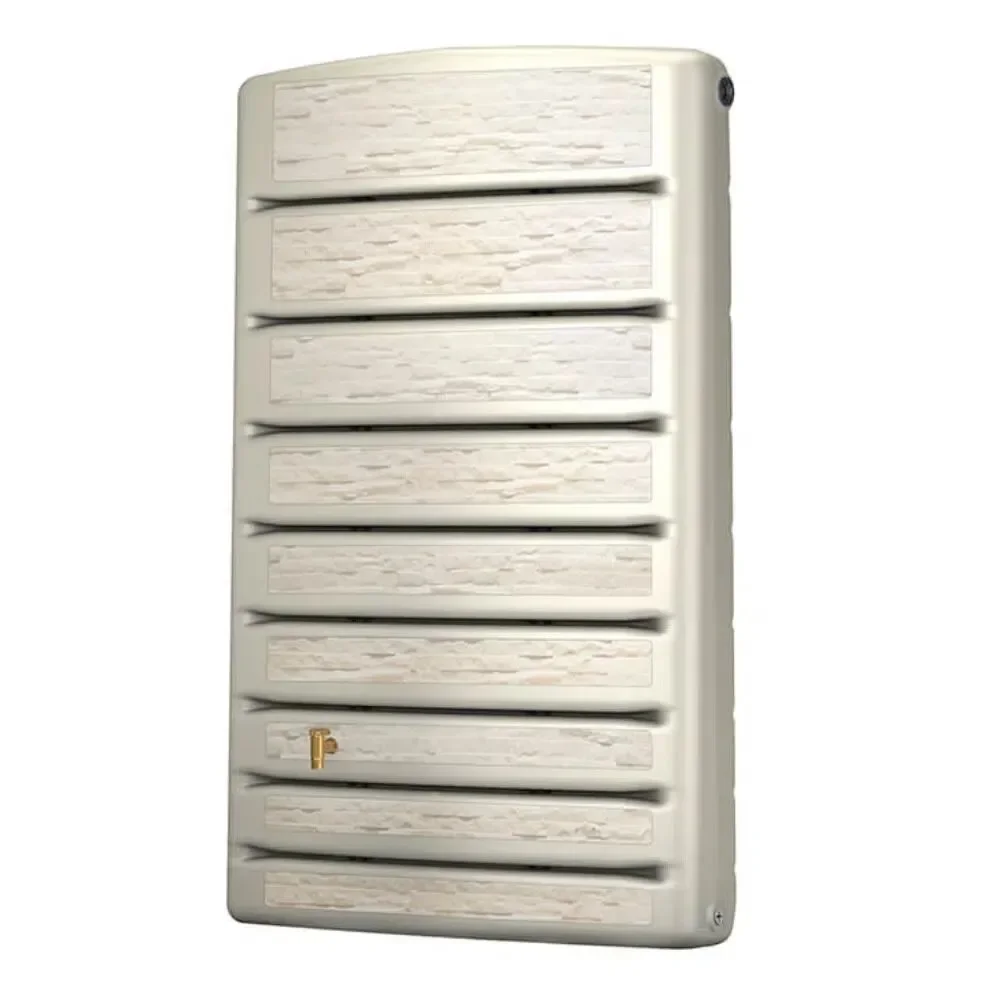
The Garantia Extra Slim Stone-Effect Wall Tank delivers 400 litres of rainwater storage in one of the slimmest profiles available — just 280mm deep. Manufactured by Graf, sold under their Garantia range, it's the practical choice for gardens, patios, or balconies where space is tight but storage capacity still matters. Built from 100% recycled plastic, it's UV-stable and weather-resistant throughout.
At 1840mm tall and only 280mm deep, this tank fits flush against a wall without eating into your outdoor space — and the stone-effect finish means it doesn't need hiding away.
Key features
Ultra-slim profile – 280mm deep, fits against virtually any garden wall
400L capacity – serious storage without the footprint
100% recycled plastic construction – UV-stable and weather-resistant
Stone-effect finish – blends into urban or rural garden settings
Brass-coloured aqua-quick plastic tap included – easy access for watering cans or hoses
Setup kit included – everything needed to connect to your downpipe, except the diverter (see below)
Connecting to your downpipe
A setup kit is included, but a downpipe diverter is required separately — add one to your order below. If you're connecting to a square downpipe, you'll need the Square Downpipe Diverter specifically.
Per Graf's installation guidance: "The water butts do not come predrilled. This product is very easy to use and can be drilled in by anyone. Simply attach the drill bit onto your drill and begin drilling – remember you must drill the hole in the water butt at the same level as the hole in the downpipe! As long as the holes drilled in both the water butt and the downpipe are level, the water will continue down the downpipe when the water butt is full."
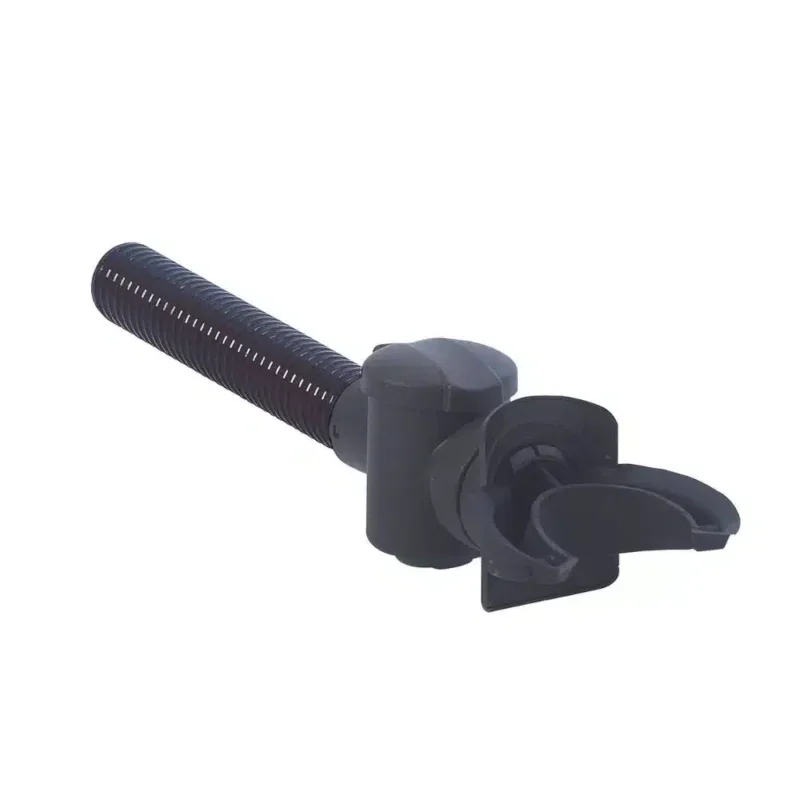
The Garantia Speedy Downpipe Filter connects your water butt to your round downpipe without cutting the pipe in half. Manufactured by Graf, sold under their Garantia range, it filters debris from the incoming rainwater before it enters the tank, and automatically diverts flow back down the downpipe once the butt is full — no overflow risk. A hole-saw drill bit is included, so no additional tools are needed for installation.
Compatible with round downpipes from 68mm to 100mm in diameter, across plastic, cast iron, and aluminium.
Key features
Fits round downpipes 68mm–100mm – compatible with plastic, cast iron, and aluminium downpipes
Hole-saw drill bit included – drill a hole in the side of the downpipe and insert the rubber cup; no need to cut the pipe in half
Built-in debris filter – keeps leaves, moss, and roof debris out of the tank
Automatic overflow diversion – water returns down the downpipe once the butt is full
Stop-flow function – manually stop water entering the butt during hard frost to prevent freezing damage
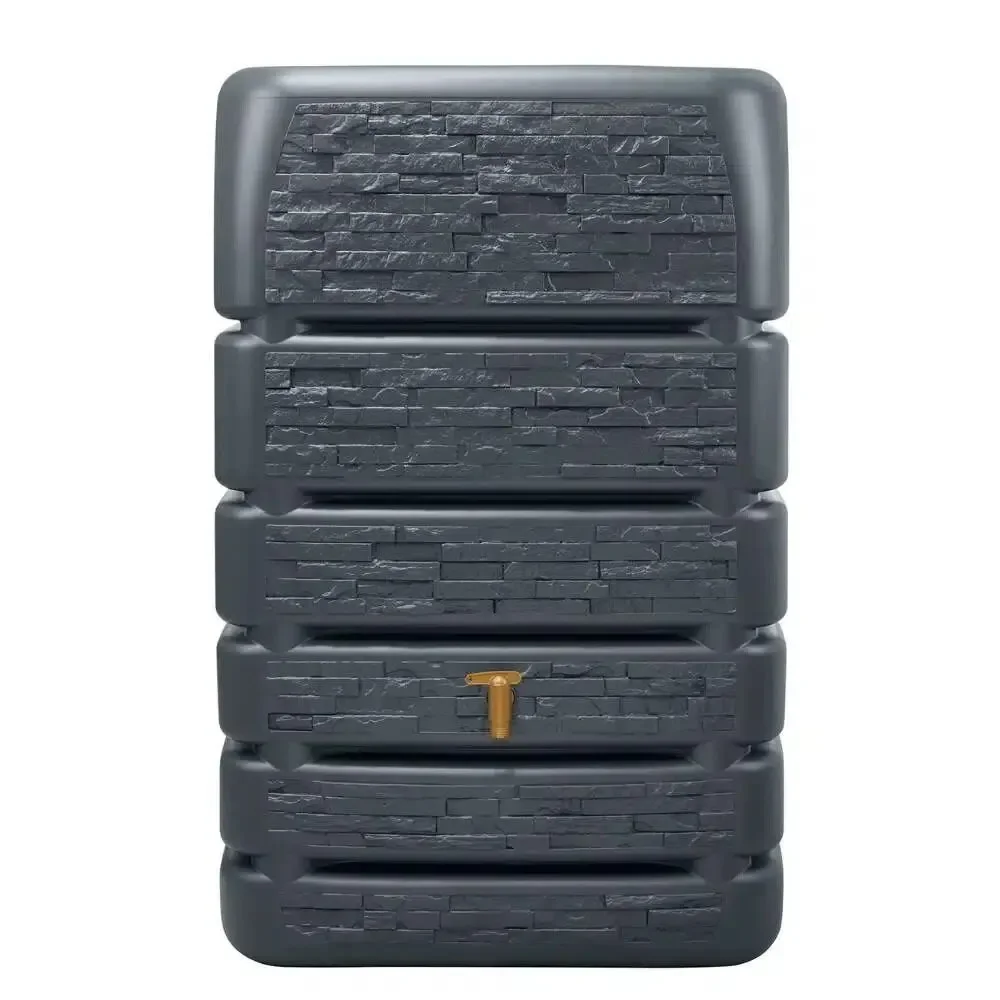
This 510L Slim Stone Decor Wall Tank offers serious water storage capacity without the bulk, ideal if you're after a high-output butt that still looks the part. Manufactured by Graf, sold under their Garantia range, it's built entirely from 100% recycled plastic, with UV-stable, weather-resistant construction that's made to last outdoors year-round.
The stacked stone wall finish in Graphite Grey means you don't need to tuck this one out of sight — it works as a feature in its own right rather than something to hide behind the shed.
Key features
Slim, wall-mounted profile – fits neatly against urban or rural garden walls without eating up space
High-output brass-coloured tap included – fills a watering can in seconds, no waiting around
510L capacity – collects a substantial volume of naturally soft rainwater for the garden
100% recycled plastic construction – UV-stable and weather-resistant
Stacked stone effect finish – a decorative alternative to a standard plain water butt
Connecting to your downpipe
A downpipe diverter is required separately — add one to your order below. If you're connecting to a square downpipe, you'll need the Square Downpipe Diverter specifically.
Per Graf's installation guidance: "The water butts do not come predrilled. This product is very easy to use and can be drilled in by anyone. Simply attach the drill bit onto your drill and begin drilling – remember you must drill the hole in the water butt at the same level as the hole in the downpipe! As long as the holes drilled in both the water butt and the downpipe are level, the water will continue down the downpipe when the water butt is full."






Choosing your Septic Tank
-
The right size depends on the number of bedrooms and the likely number of occupants. The general rule is a minimum of 2,800 litres for up to 4 people, scaling up from there. For a 4-bedroom home you'd typically be looking at a 3,800–4,500 litre tank. We've been sizing and installing septic tanks across Cheshire and the North West since 1995, so if you're not sure, just give us a call on 01270 442442 — we're happy to talk it through.
-
In most cases, yes, new septic tank installations require Building Regulations approval (Part H) and in some cases planning consent from your local authority. If you're replacing an existing system on a like-for-like basis, permitted development rights may apply, but you'll still need to ensure the new tank is compliant. Systems must also meet the Environment Agency's General Binding Rules for small sewage discharges. We offer a full drainage consultancy service that handles the regulatory side.
-
Not anymore, and this catches a lot of people out. Since January 2020, the Environment Agency's updated General Binding Rules mean a septic tank can only discharge to a drainage field (soakaway) in the ground, not directly to a surface watercourse. If your existing tank discharges to a ditch, stream, or river, it's no longer compliant and you'll need to either upgrade to a sewage treatment plant or redirect the discharge to a drainage field. We can survey your site and advise on the most practical and cost-effective solution - get in touch.
-
As a general rule, most septic tanks should be desludged once a year by a licensed waste carrier. How quickly sludge builds up depends on usage, tank size, and what goes into the system, things like wet wipes, excessive bleach use, and non-biodegradable products can all reduce efficiency and shorten the time between empties. Keep your paperwork too: the Environment Agency recommends retaining records of all maintenance visits. We can take care of servicing and desludging as part of a maintenance package - contact us for details.
-
It depends on your site. Septic tanks are generally the simpler, lower-cost option. However, they require a suitable drainage field to discharge to, and as above, they can't discharge directly to a watercourse. If your ground conditions don't support a drainage field, or if you're close to a sensitive water environment, a sewage treatment plant is likely to be the better fit. We stock both and we'll give you an honest steer on which is right for your situation rather than just selling you the most expensive option. Have a look at our treatment plants range or call the team.
Choosing your Sewage Treatment Plant
-
A sewage treatment plant (also called a package treatment plant) provides a higher level of wastewater treatment than a septic tank. Where a septic tank settles solids and discharges partially treated effluent to a drainage field, a sewage treatment plant uses an active aeration process to produce a cleaner, fully treated discharge — typically meeting the Environment Agency's General Binding Rules and suitable for discharge directly to a watercourse or ditch. They are the preferred solution for sites where a drainage field is not practical or where stricter discharge consents apply.
-
Sizing is based on the number of persons (PE - population equivalent) the system needs to serve, as well as peak flow rates and the type of use. For most domestic properties, this is calculated from the number of bedrooms. Commercial sites, holiday lets, glamping sites, farm shops, and B&Bs require additional sizing considerations. Our team can size a system correctly for your site - call us on 01270 442442.
-
For most new installations, you'll need to comply with Building Regulations Part H and notify the Environment Agency. In England, many domestic sewage treatment plants discharging to ground or surface water are covered by the General Binding Rules, which removes the need for a formal permit, provided the system meets the required standards and is correctly sited. New builds and some replacement installations may still require planning permission. Our drainage consultancy service covers regulatory compliance from start to finish.
-
Most sewage treatment plants should be serviced annually by a qualified engineer, with desludging carried out as required — typically every one to three years depending on the system and usage. Regular maintenance keeps the plant running efficiently, protects your drainage field or discharge point, and is often required to maintain your manufacturer warranty. We offer servicing and maintenance across Cheshire and the North West - contact us to arrange a visit.
-
We supply sewage treatment plants from trusted UK and European manufacturers including Marsh Industries, Graf, Diamond (WCSEE), and Biorock. Each brand offers different installation and performance characteristics, and we'll help you identify the right system for your site, budget, and access requirements.
Choosing your Water Storage Tank
-
A water butt is the simplest option: a compact above-ground container that collects rainwater from a downpipe, ideal for gardens and small outdoor spaces. A water storage tank is a larger vessel, above or below ground, used to store significant volumes of water for irrigation, agriculture, construction, or commercial use. A rainwater harvesting system goes a step further, capturing, filtering, and distributing rainwater for use inside a building, toilet flushing, laundry, and more, reducing your mains water consumption meaningfully over time.
We supply all three, from compact water butts through to large-capacity underground systems holding tens of thousands of litres, from trusted manufacturers including Tuffa, Graf, Marsh Industries, and Garantia. Not sure which is right for your project? Give us a call.
-
The right tank size depends on what you're using it for. For garden irrigation, a 100 to 500 litre water butt is usually sufficient. For rainwater harvesting to supply toilets or laundry, you'd typically need 1,500 litres or more, calculated against your roof catchment area and local rainfall. Agricultural and commercial storage requirements vary considerably. We're happy to help you work out the right capacity for your property - give us a call and we'll talk it through.
-
The right tank size depends on what you're using it for. For garden irrigation, a 100 to 500 litre water butt is usually sufficient. For rainwater harvesting to supply toilets or laundry, you'd typically need 1,500 litres or more, calculated against your roof catchment area and local rainfall. Agricultural and commercial storage requirements vary considerably. We're happy to help you work out the right capacity for your property - give us a call and we'll talk it through.
-
Above-ground water storage tanks require very little maintenance, an occasional clean and inspection is usually all that's needed. Underground rainwater harvesting systems benefit from an annual check of filters and inlet screens to keep everything running efficiently. All the tanks we stock are built to last, and we only work with manufacturers we trust, so you're not going to be dealing with problems down the line. If you do ever need support, we're here.
-
Yes to both. We offer nationwide delivery direct to site across mainland UK, and for larger or more complex tanks we can arrange HIAB offload to make things easier on site. We also supply and install underground rainwater harvesting systems across Cheshire and the North West. Above-ground tanks are generally straightforward to position once delivered. Contact us if you'd like to discuss installation.